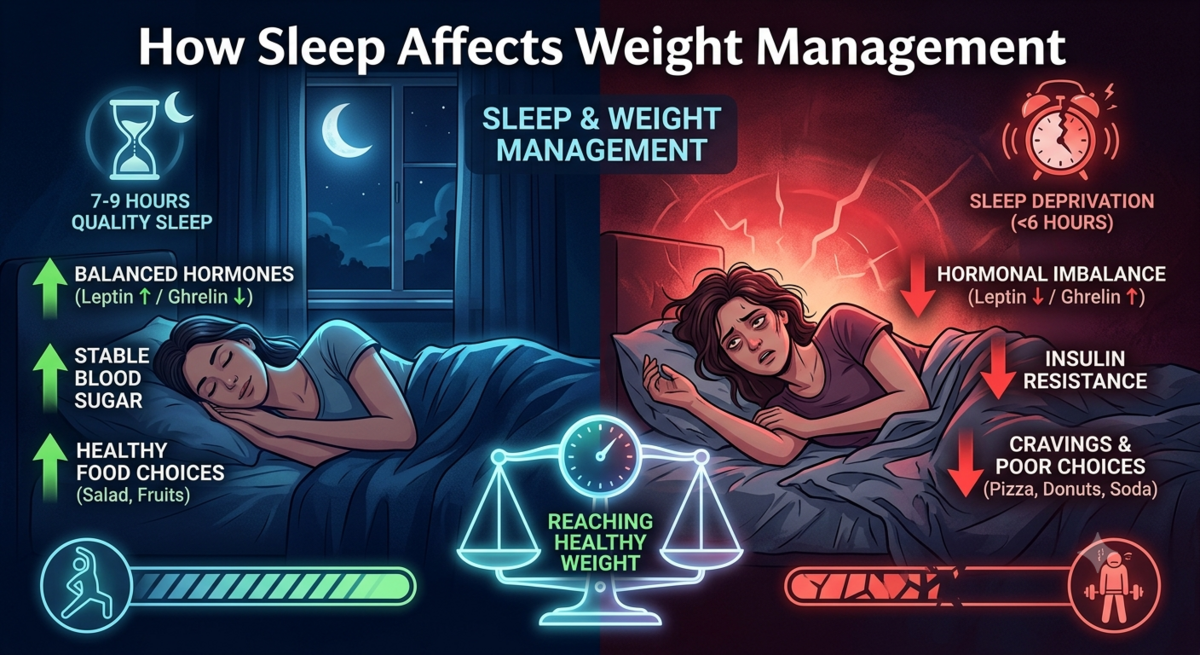
Sleep is one of the most underrated factors in weight management. Most people focus on diet and exercise, but sleep quality and duration directly influence how your body stores fat, regulates hunger, and uses energy. If you are trying to lose weight or maintain a healthy weight, sleep deserves as much attention as your meal plan.
The Hormonal Connection
Sleep deprivation alters two key hormones that control appetite: ghrelin and leptin. Ghrelin signals hunger to your brain. Leptin signals fullness. When you do not get enough sleep, ghrelin levels rise and leptin levels fall. This combination makes you feel hungrier and less satisfied after eating. Studies show that people who sleep less than 6 hours per night consume an average of 300 more calories the next day compared to those who sleep 8 hour
Sleep and Insulin Sensitivity
Poor sleep reduces insulin sensitivity. Insulin is the hormone that helps your cells absorb glucose from your bloodstream. When your cells become less responsive to insulin, your pancreas produces more insulin to compensate. Higher insulin levels promote fat storage and make it harder to burn stored fat for energy. Over time, this can lead to weight gain and increase your risk for type 2 diabetes.
The Impact on Food Choices
Sleep deprivation affects the prefrontal cortex, the part of your brain responsible for decision making and impulse control. When you are tired, you are more likely to choose high calorie, high carbohydrate foods. Your brain craves quick energy sources. This is not a lack of willpower. It is a biological response to sleep loss. Well rested individuals consistently choose healthier options and have better portion control.
Sleep and Physical Activity
Fatigue from poor sleep reduces your motivation to exercise. Even if you do work out, your performance suffers. You have less endurance, slower reaction times, and lower strength output. This means you burn fewer calories during your workouts. Additionally, tired people tend to move less throughout the day. Non exercise activity thermogenesis, or NEAT, declines significantly with sleep debt. These small decreases in daily movement add up over weeks and months.
The Role of Circadian Rhythm
Your body has an internal clock that regulates metabolism. Eating at times that conflict with your circadian rhythm, such as late at night, leads to poorer glucose tolerance and less efficient calorie burning. Your digestive system slows down in the evening. Calories consumed late at night are more likely to be stored as fat. Aligning your eating schedule with your sleep wake cycle supports better metabolic health.
How Much Sleep Do You Need
The American Academy of Sleep Medicine recommends 7 to 9 hours of quality sleep per night for adults. Consistency matters as much as duration. Going to bed and waking at the same time each day reinforces your circadian rhythm. Irregular sleep patterns disrupt hormone production and metabolic processes even if total sleep time is adequate.
Practical Steps for Better Sleep
Keep your bedroom cool, dark, and quiet. Avoid caffeine after 2 PM. Limit alcohol near bedtime because it fragments sleep quality. Stop eating at least 2 hours before you lie down. Remove screens from your bedroom. The blue light from phones and tablets suppresses melatonin production. A 15 minute wind down routine with stretching or reading prepares your body for rest.
Tracking Your Progress
Many people track calories and steps but ignore sleep metrics. If you are monitoring your weight management efforts, include sleep in your data. Note how you feel and what you eat after a poor night versus a good night. You will see clear patterns. To understand your daily energy needs, you can use a free TDEE Calculator to establish your baseline calorie requirements. This tool gives you a starting point for your diet, but remember that sleep quality will influence how your body uses those calories.
The Bottom Line
Sleep is not optional for weight management. It is a biological requirement that affects hormone balance, food choices, insulin function, and physical activity. Improving your sleep habits can make your diet and exercise efforts more effective. Without adequate rest, even the best nutrition plan faces an uphill battle. Prioritize sleep as a core component of your health strategy. Your metabolism will thank you.